Claude Code is not great at go to market yet because it is an excellent reasoning engine on a weak runtime. It has no persistent memory across sessions, no scheduler, no shared state across parallel runs, and no backpressure when a provider rate limits mid list. Those are runtime gaps, not model gaps.
Every operator who has tried to run production outbound out of a Claude Code prompt has hit the same four walls, usually in the same order. This is the honest counterweight to our own operator guide to using Claude Code for GTM. The reasoning is not the problem. The runtime is.
What Claude Code is genuinely great at in GTM
Start with the fair part. In the 2026 Claude for GTM Pulse Report run across 200 GTM operators, 92 percent reported time savings and 67 percent said Claude Code enabled workflows they could not run before. That is a rare finding for any GTM tool.
The reasoning wins are real. Claude Code will read a 40 page product doc, an ICP file, and a call transcript, then draft an outbound sequence that references a specific line from the transcript, not a placeholder. It will take a messy CSV, a schema, and a prose description of the target account, then write the enrichment logic and run it. It will scan an ad library and a competitor changelog and hand you back a battlecard the same afternoon. Any single one of those saves half a day. Our own guide on Claude Code for SDRs walks through the exact prompts.
What Claude Code is doing well here is not go to market. It is reading, thinking, and writing at a very high standard. Those are the reasoning parts of the job. The problem shows up the moment the work has to keep running after you close the tab.
Gap 1, memory: every session starts from zero
Every Claude Code session starts with an empty head. It reads your CLAUDE.md and your project files, and that is all it knows about your world. The prospects it enriched last Tuesday, the reply it classified an hour ago, the note the AE added to the account after the last call, none of that carries into the next session unless you wrote it to a file yourself.
Operators feel this on day three. You spent Monday teaching the agent your ICP, your objection map, and the reply logic your team actually uses. Wednesday, the agent forgets. You paste it back in, and the agent forgets again on Friday. The Claude for GTM Pulse Report put cross session memory in the top three frustrations, alongside credits and integrations, and 93 percent of Code users said they lean on detailed company context files just to compensate.
The workaround is manual. You write JSON to disk, you version your CLAUDE.md, you set up a project folder per motion so context does not bleed. That works until two things happen at once. Your motions cross, and your agent needs to remember something an operator wrote by hand somewhere else. A memory a runtime writes for you is a working memory. A memory you copy paste into a prompt every morning is a note file.
Gap 2, scheduling: it only runs when you are watching
Claude Code runs when you invoke it. There is no built in cron, no background daemon, no always on monitoring. SyncGTM's operator writeup puts it plainly. Every workflow needs a human to trigger it or an external scheduler wrapping it.
The consequence for a GTM team is not academic. A signal engine that only checks for new hires when you open the terminal is not a signal engine. A CRM cleaner that only runs when you remember to run it is a Sunday afternoon chore. A sequencer that pauses the moment you sleep is a manual sender. The middle mile of a real go to market motion runs on a clock, not on a prompt.
Some teams reach for GitHub Actions or launchd to wrap Claude Code in a cron. That works for the trigger. It does not fix any of the other three gaps, and it turns every workflow into a small ops project of its own. If you want the shape of the runtime that closes this properly, our take on the agentic GTM operating system covers it.
Gap 3, state: parallel runs do not know about each other
The moment your team wants to run more than one workflow, the third gap opens. Claude Code has no shared workspace, no audit trail, no coordination between two prompts running in two terminals. Two operators can enrich the same list, one on Monday morning, one on Monday afternoon, and burn the same credits twice, because neither run knows the other happened.
The worst version of this shows up inside a single motion. Your prospecting agent hands off to your qualification agent, and the qualification agent hands off to your sender. Three agents, three prompts, three separate Claude Code sessions. The prospecting run finishes and writes 200 leads to a CSV. The qualification run reads the wrong version of the file, because a second prospecting run started while the first was still writing. The sender then queues both. Nothing crashed. The pipeline just quietly doubled.
Vendors ship this coordination out of the box. Clay's public plans run from $185 a month for Launch, or $167 annualized, to $495 for Growth, and part of what you are paying for is one shared table where every enrichment column, every workflow run, and every credit charge is visible in one place. Claude Code does not have that layer. Without a runtime that owns state, the second and third teammate to touch a Claude Code workflow either coordinate by Slack or corrupt each other's output. This is the same coordination cost we called out in the operator guide to building your own GTM agent.
Gap 4, rate limits: what happens at lead 400 of 1000
The fourth gap is the one that turns a promising demo into a Monday morning postmortem. Claude Code inherits Anthropic's usage limits, and it also has to survive whatever rate limits your data providers throw at it. It has no memory of what it already finished, and no way to back off cleanly when a provider says stop.
Anthropic's own usage caps are shaped like this. Claude Code enforces two overlapping limits, a 5 hour rolling window on prompts plus a weekly active hours cap, and that quota is shared across Claude Code, Claude.ai chat, and Cowork (TrueFoundry). The same source notes peak hour throttling on weekdays 5 to 11 am PT, which is exactly the window a US west coast SDR team runs their morning stack. A TechCrunch report from July 2025 noted that Anthropic tightened those limits without notifying users, concentrated on Max plan power users, the group most likely to be running production GTM out of a terminal. Max plans start at $100 a month on the current Anthropic pricing page, and Pulse Report respondents said Max users hit the wall two to three times a day.
Now stack a provider rate limit on top. A single waterfall enrichment run over 1000 leads pulls from three or four data sources. One of them returns a 429 at lead 400. A well built runtime pauses the queue, backs off with the retry after header the provider sent, and picks up at lead 400 when the window clears. Claude Code stops, prints the error, and waits for you. You do not know which of the 400 leads finished cleanly, because there is no shared state. You rerun. Now you have either double billed the enrichment for the first 400 or, if you got lucky and your prompt included a dedupe check, skipped them. The failure is not the model. The model reasoned perfectly. The runtime never existed.
Why these are runtime gaps, not model gaps
The reason to group all four this way is that grouping them changes the fix. Every one of them, memory, scheduling, state, backpressure, is a runtime problem. A better model does not solve any of them. Claude Sonnet 5.1 would fail the 1000 lead run in exactly the same place, because the queue and the retry logic and the memory of what already finished were never Claude's job.
Vendors like Clay solve the four gaps by owning the runtime. That is what you are buying at $185 to $495 a month on the Clay pricing page: a table that remembers rows, a scheduler that reruns them, a shared workspace that shows two operators the same state, and a credit meter that at least gives you visibility when a run has burned through. The trade off is that the runtime is opaque and the meter runs whether the work is compounding or not.
Claude Code sits at the other end. Full reasoning, full inspectability, no runtime. The good version of the answer is not to abandon it and go back to Clay. It is to leave the reasoning where it lives, in Claude Code, and add a runtime layer that closes the four gaps without hiding the prompts.
What a runtime layer adds on top
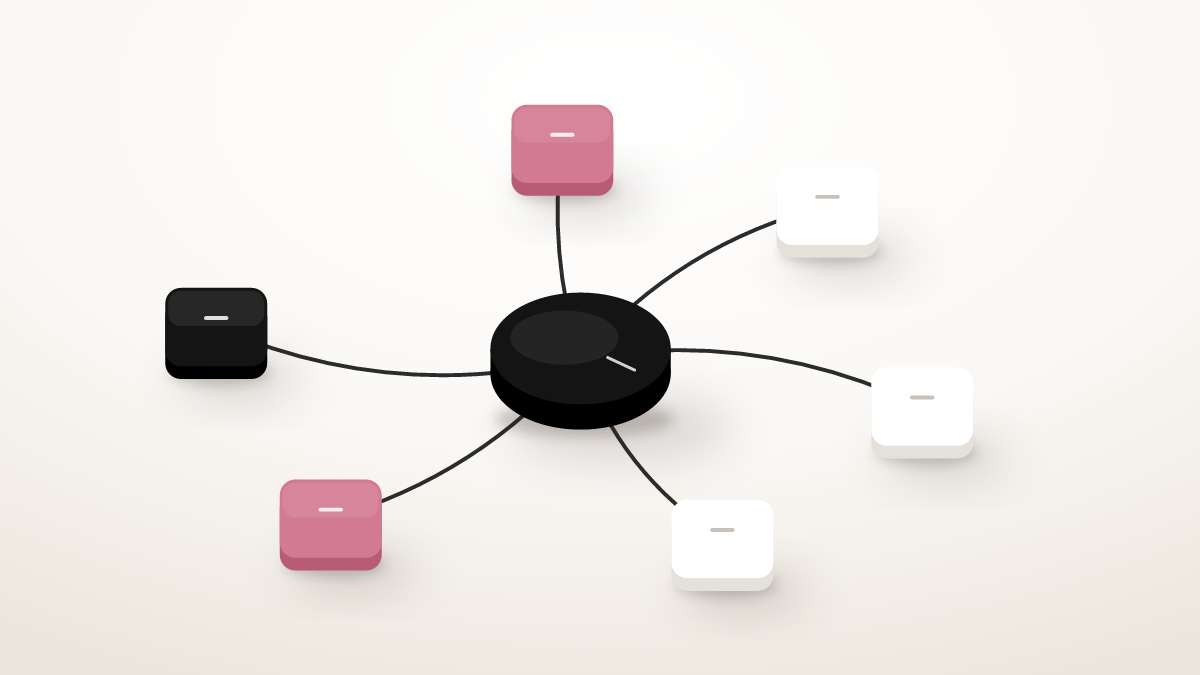
A GTM runtime layer needs four properties, one for each gap. It needs a working memory that persists across sessions so the agent remembers what it saw on Tuesday. It needs a scheduler that runs prompts on a clock, not on a human. It needs shared state so two operators and three agents can act on the same source of truth. And it needs backpressure so a 429 at lead 400 pauses the queue instead of corrupting it.
Yalc is one attempt at that layer. It runs from Claude Code on your machine, keeps your prompts and skills in a folder you can read and edit, and adds the runtime that turns a great reasoning engine into a workflow that survives the week. State lives in files you own, scheduling is a launchd or cron entry the skill installs itself, memory is a directory the agent writes to and reads from every run, and provider calls go through a retry layer that respects rate limits. What sits underneath is unchanged. Crustdata for firmographic data, FullEnrich for waterfall email discovery, Instantly for the sender, HubSpot for the system of record, Notion for anything a human needs to read. Yalc adds the runtime. Nothing gets ripped out.
The point is not to sell you another tool. It is that the four gaps are diagnosable and fixable in the same shape. Any runtime that owns memory, scheduling, state, and backpressure closes them. If the runtime also happens to keep the prompts visible and let you edit them like code, you also keep the property that made Claude Code worth using in the first place.
What to do this week
Take one workflow you have been running by hand in Claude Code and label where each of the four gaps hits you. Which memory did you paste back in this morning. Which cron would replace which manual run. Which teammate double ran which script. Which provider 429ed you last week and what did you rerun.
You will find one gap doing most of the damage. Fix that one first. If it is memory, write a project directory and a state file the agent reads on start and writes on exit. If it is scheduling, put a launchd job around your top prompt and let it fire on a clock. If it is state, pick one file that is the truth and make every agent read from it. If it is backpressure, wrap your provider calls in a retry with the retry after header instead of a bare fetch. The fixes are small. The gain is that Monday morning stops surprising you. If you want the full runtime shape a GTM team ends up needing, our reference on the GTM stack in 2026 is the map.
Claude Code is not great at go to market yet because it was never built to be. It was built to reason. Pair the reasoning with a runtime that owns memory, scheduling, state, and backpressure, and the same tool becomes the one that runs your go to market motion end to end.
Frequently Asked Questions
Is Claude Code good for sales and GTM workflows?
Yes for the reasoning parts of the job, like drafting sequences, cleaning CRM data, and building battlecards, where 92 percent of surveyed operators reported real time savings. It is weak for the runtime parts, like running unattended, remembering state across sessions, and coordinating parallel runs. Small teams get a lot of value out of it. Larger teams need a runtime layer on top.
What are the main limitations of Claude Code for go to market?
Four structural gaps. No persistent memory across sessions, so context has to be pasted in every time. No scheduler, so nothing runs unless you are watching. No shared state across parallel runs, so teammates and agents can corrupt each other's work. And no backpressure when a data provider rate limits mid list, so a single 429 can lose a run of hundreds of leads. Credits and rate throttling are the top complaints in the Pulse Report, but the deeper cause is the missing runtime.
Does Claude Code have persistent memory across sessions?
No. Every session starts empty and only reads what is written in files like CLAUDE.md. The Pulse Report found that 93 percent of Claude Code GTM users rely on detailed context files as a manual workaround. Third party tools like claude-mem exist to add a memory layer, but out of the box the memory is per session.
Can Claude Code run scheduled or background jobs?
Not natively. There is no built in cron, no daemon, and no scheduler. To run a Claude Code prompt on a clock you have to wrap it in GitHub Actions, launchd, or a separate scheduling service. That gets the trigger fired but does not solve the memory, state, or backpressure gaps.
What happens when Claude Code hits a rate limit?
New prompts are paused with an explicit error until the window resets. There are two overlapping limits, a 5 hour rolling window on prompts and a weekly active hours cap, and both are shared across Claude Code, Claude.ai, and Cowork. Peak throttling narrows the window further on US weekdays from 5 to 11 am PT. Existing runs stop where they were, which is where the missing memory and state gaps compound.
How much does Claude Code cost for a small GTM team?
The Claude Pro plan is 20 dollars a month billed monthly or 17 a month annual on the current pricing page, and Max plans start at 100 a month for higher usage. Heavy GTM users routinely need Max and still report hitting caps two to three times a day, per the Pulse Report. That is before any data provider or sending tool budget.
Can Claude Code replace Clay for GTM?
For a solo operator running small volumes with a comfort in the terminal, yes. For a team running recurring waterfalls at scale, Claude Code alone does not have the runtime Clay ships out of the box. The realistic play is to keep the parts of the Clay pattern that produce real data and add a runtime layer on top of Claude Code that closes the four gaps, rather than choosing between them.