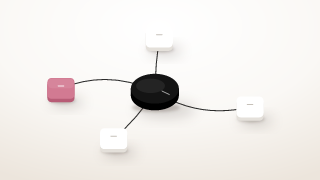
Pick Clay if you want a hosted spreadsheet canvas with a 150-plus provider catalog and you would rather pay a monthly subscription than maintain integrations. Pick Yalc if you work inside Claude Code, need data to stay on your own machine, and want to pay data providers directly instead of a workflow vendor. The single deciding dimension is where your workflow logic lives, in someone else's table or in markdown files you own.
The rest of this comparison shows the math and the trade-offs behind that call, then maps both tools to specific operator profiles so you can stop reading reviews and decide.
What is the difference between Yalc and Clay?
Clay is a hosted workflow canvas built on a spreadsheet metaphor. Rows are prospects or companies, columns are enrichment steps, AI prompts, or actions. It integrates with more than 150 external data sources rather than running its own database, and chains them into waterfall enrichment, querying providers in sequence until one returns the field you need (Clay company overview). Clay raised a $100M Series C at a $3.1B valuation in August 2025, led by Alphabet's CapitalG (TechCrunch, Aug 2025). That funding tells you the center of gravity is the table and a large hosted product, and the operators who get the most from it think in tables natively.
Yalc is an AI-native operator OS that lives inside Claude Code as markdown-configured skills, agents, and playbooks. Instead of a canvas you have a conversation, and instead of a row you have a prompt that orchestrates real APIs and writes structured output to disk. The center of gravity is the agent loop, not the spreadsheet.
The two overlap on outcome, sourced and enriched and sequenced prospects, not on surface. That is why a flat feature grid misleads. The honest comparison runs through the decisions an operator actually faces.
| Dimension | Yalc | Clay |
|---|---|---|
| Price | Flat product fee, no per-row meter, plus direct provider costs | $185 to $495/mo plus Data Credits and Actions |
| Data location | Local, on your machine | Hosted in Clay's cloud |
| Workflow surface | Markdown skills in Claude Code | Visual spreadsheet canvas |
| Provider catalog | Bring-your-own via API key | 150+ native integrations |
| Version control | Git-native diffs and rollbacks | Limited table history |
| Iteration cost | No credit burn on rewrites | Credits spent per preview run |
| Learning curve | Requires Claude Code comfort | No terminal needed |
| Best fit | Technical operators, compliance-sensitive teams | Non-technical users, one-off pulls |
How much does Clay cost compared to Yalc?
Clay charges a monthly subscription plus a metered credit bucket. In March 2026 it split that bucket into two meters, Data Credits for enrichment and Actions for everything the platform runs. Verified plans from the Clay pricing page:
| Plan | Monthly price | Data credits / mo | Actions / mo |
|---|---|---|---|
| Free | $0 | 100 | 500 |
| Launch | $185 (or $167 annual) | 3,000 | 15,000 |
| Growth | $495 (or $446 annual) | 6,000 | 40,000 |
| Enterprise | Custom | Custom, 100,000+ | Custom, 200,000+ |
Enterprise contracts are not on the public page. Third-party benchmarking puts the median Clay enterprise contract near $30,400 per year (Vendr data cited by Salesmotion, 2026). The structural point is that experimentation burns credits, so a 50,000-row test workflow can chew a month's allowance in an afternoon, and teams iterating on a new play pay for every preview.
Yalc takes no per-row credit and no markup on data, because you connect your own provider keys. What you pay sits one layer below, the data and messaging APIs you call directly. Crustdata meters firmographic and signal data, FullEnrich charges per enriched contact, Unipile charges per LinkedIn account per month. Each vendor invoices for what its API actually delivered, and you can swap one without renegotiating a platform contract.
The non-obvious judgment is that the gap is not really subscription versus free. It is iteration cost. Rewriting a Yalc skill ten times this week costs only the data calls you actually trigger. Rewriting a Clay table ten times burns Actions and Data Credits on every pass because each preview re-runs the columns. In a learning phase, that compounds against the hosted model.
Where does your prospect data live?
Clay is hosted, so your tables, prompts, enriched rows, and AI-generated copy sit in Clay's infrastructure. For most teams that is fine, and Clay's customer roster includes Anthropic, Google, OpenAI and Stripe across 17,000-plus customers (TechCrunch, Aug 2025), so it clears serious procurement. The friction shows up earlier, during the review itself. Teams under compliance scrutiny in legal, financial services, or regulated B2B SaaS hit a recurring sticking point when a third party holds enriched prospect data, and the data-room conversation slows adoption.
Yalc runs on your stack. Prompts sit in markdown files you own, enriched data writes to your own CRM or files, and the provider keys stay yours, so the data relationship is between you and Crustdata or FullEnrich rather than routed through a workflow vendor. Because the skill is plain text you can audit exactly what gets sent.
The trade-off is real and worth naming. Local-first means you own backups, version control, and the install. Hosted means someone else owns uptime and you trade control for convenience. Operators who already think in repos adopt the local model fast. Operators who have never opened a terminal find Clay friendlier on day one.
Tables or markdown skills, which workflow surface fits you?
This is the experiential gap most reviews skip, and it teardowns the usual "Clay is just easier" advice. Clay is easier to start and harder to scale across a team, for a structural reason.
Clay's surface is a table with enrichment columns and conditional logic. You drag a column, pick a provider, write a prompt for an AI column, set a condition, run the row. It is approachable, visual, and excellent for one operator owning one workflow end to end. The cap arrives at team scale. Two operators editing the same table eventually overwrite each other's logic, versioning is thin next to git, and a workflow that worked last Tuesday and broke today is hard to diff because the logic lives in cells rather than in lines of text.
Yalc's surface is a folder of markdown skills. Each skill is a plain-text file with a description, a trigger, and the steps the agent runs. You read it like prose, diff it like code, and version it like code, because prompts now behave like code. The skill compounds across runs since every iteration improves the markdown. The cost is the learning curve. If you do not already work in Claude Code, the first hour feels foreign.
Here is the decision rule a generalist will not commit to. Choose the surface your team already thinks in, not the one with more features, then run a real play through it for two weeks before judging output. A Clay-native operator dropped into a markdown repo treats it as documentation and ignores the agent loop, which wastes the point of Yalc. A markdown-native operator dropped into Clay fights the canvas trying to write skills in cells. The mismatch, not the tool, is what fails.
Locked catalog or bring-your-own providers?
Clay ships native integrations across more than 150 data sources plus a marketplace of community-built columns (Clay company overview). The catalog is genuinely broad. The constraint incumbents omit is that the catalog is the boundary. When a vendor launches an API in May, you wait for Clay to build the column. When a vendor changes rate limits or pricing, you wait again. The platform mediates every provider relationship, which is fast until a provider you need is not in the list.
Yalc has no native catalog because every integration is a markdown skill that calls a real API directly. Crustdata for firmographic and signal data, FullEnrich for waterfall enrichment, Unipile for LinkedIn outreach, and anything else with a documented endpoint. If a vendor ships an API today, you wire it in today. You own the integration, and you own the maintenance.
For teams running uncommon providers, regional data sources, internal data lakes, scrape pipelines, niche signal feeds, bring-your-own is the only model that even works. For teams running the same five tools as everyone else in their segment, the hosted catalog is genuinely faster. The full Clay alternatives breakdown covers how to choose a provider stack before you commit, and the waterfall enrichment guide explains how to replicate Clay's multi-provider fallback without the platform in the middle.
Who should pick Clay?
Clay is the right pick for several real profiles, no apologies needed.
A solo RevOps lead at a Series A SaaS company running one or two recurring workflows, with no developer support and a budget that prefers a predictable invoice. The Launch plan at $185 per month is friendlier on day one than any agent loop, and the credit math holds at modest volumes.
An outbound agency owner running client accounts where each client wants to watch the workflow. Clay tables are demoable, a client can sit beside you and see enrichment fill in, and markdown skills require a different conversation.
A growth team building one big experimental workflow per quarter that needs heavy enrichment across many providers and would rather pay a credit premium than maintain integration glue. The catalog plus the table is hard to beat for that shape of work.
A non-technical founder doing outbound for the first time who needs a platform that holds their hand. Clay's onboarding, templates, and community content carry an early user further than a configurable agent stack will. If you sit in any of these profiles, the wrong move is to over-engineer your first stack. Run Clay, ship the play, revisit in twelve months. The Clay alternatives roundup is worth a skim only if budget is the binding constraint, and what Reddit actually recommends as Clay alternatives shows how operators weigh those same picks in the wild.
Who should pick Yalc?
Yalc fits a different, clearly bounded set of profiles, and the shared pattern is technical comfort plus a need for control.
A GTM engineer building agentic outbound as the job. If you design prompts, version workflows, and ship playbooks other operators run, you already work in Claude Code, and Yalc is built to make that surface productive for outbound specifically. Skills as markdown, agents as composable units, and a CLI loop that iterates faster than a browser canvas.
A bootstrapped founder with a real product and a thin budget who would rather pay providers directly than pay a workflow markup. An agent stack plus three or four API providers usually beats a Clay plan plus those same providers during iteration.
A RevOps team under compliance review where data control is non-negotiable. Local-first plus markdown plus your own CRM is the architecture that survives a security review without rounds of vendor questionnaires.
An operator-agency running playbooks across many clients with slightly different data, ICP definitions, and messaging. Markdown skills duplicate cheaper than Clay workspaces and version cleaner across accounts.
A team running the same stable play day after day, signal capture, enrichment, sequencing, classification, logging, that they want running in the background rather than in a browser tab. The operator playbook for B2B lead generation walks through what that compounding looks like for a layered stack, and ai outbound without clay covers the full setup for operators who have already made the switch.
If eliminating the platform subscription entirely is the goal, the Clay alternatives shortlist guide covers the exact self-hosted architecture — what to clone, which provider keys to add, and what the monthly cost looks like at steady-state volume compared to a Clay plan.
How hard is it to migrate between Clay and Yalc?
Switching is real work, and the cost cuts both directions.
Clay to Yalc is a workflow rewrite, not a data export. The rows export easily, but the column logic has to be reimplemented as markdown skills that call providers directly. A single recurring workflow with a clear ICP is a one to two day rewrite. A team with twenty active tables is a multi-week migration that pays back in credit savings and team velocity over the following year. The step-by-step Clay to Yalc migration guide covers the order to do it in, and most teams standardize on Crustdata for sourcing, FullEnrich for waterfall enrichment, and Unipile for LinkedIn.
Yalc to Clay looks easier and turns out harder. Markdown skills export as documentation, but the table will not accept them as logic, so you rebuild each skill as a Clay workflow and accept the credit cost. Teams usually go this direction when a non-technical operator joins and needs a visual surface. Build the canvas around them and keep the skills as the system of record for the actual logic.
The hidden cost both directions is the team adopting a new mental model. Plan for two to four weeks of recalibration before judging the new tool on output. The deciding question was never features. It is which surface your team actually thinks in.
Frequently Asked Questions
Is Yalc cheaper than Clay?
It depends on volume and iteration. Yalc does not meter your work per row, so on top of the product you only pay the data and messaging APIs you call, like Crustdata, FullEnrich, and Unipile. Clay charges $185 to $495 per month for self-serve plans plus metered Data Credits and Actions on top. At low volume with heavy iteration, Yalc is usually cheaper because rewriting a skill does not burn credits. At steady high volume with a stable workflow, the gap narrows. If you are comparing Clay against Apollo rather than Yalc, the Clay vs Apollo comparison covers that pairing and the double charge hiding in the hybrid stack.
Does Clay store my prospect data?
Yes. Clay is a hosted platform, so your tables, enriched rows, prompts, and AI-generated copy live in Clay's infrastructure. That is fine for most teams and clears enterprise procurement, since customers include OpenAI and Anthropic. It becomes a sticking point for teams under active compliance review who cannot have a third party holding enriched prospect data, which is where Yalc's local-first model fits.
Do I need to code to use Yalc?
You do not write traditional code, but you do work in Claude Code and edit markdown files. Skills are plain-text prompts with a description, a trigger, and steps, so you read and version them like documents. If you have never opened a terminal, the first hour is a learning curve and Clay's visual table is friendlier on day one. If you already live in Claude Code, the markdown surface is faster.
Can Yalc do waterfall enrichment like Clay?
Yes, but you assemble it yourself instead of getting a prebuilt column. In Clay, waterfall enrichment queries providers in sequence until one returns the field. In Yalc, you write a skill that calls FullEnrich or chains providers directly, so you control the fallback order and pay each provider for what it delivers. The waterfall enrichment guide on this site walks through replicating the pattern without a platform in the middle.
Which is better for a GTM engineer?
Yalc, in most cases. If your job is designing prompts, versioning workflows, and shipping playbooks other operators run, you already work in Claude Code, and Yalc is built to make that surface productive for outbound. Markdown skills diff and compound like code, which matters when you maintain many workflows. A GTM engineer who only needs to demo a single workflow to a client may still prefer Clay's visual table for that specific use.