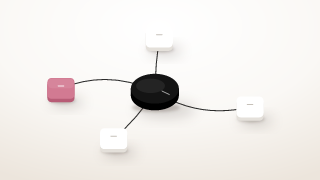
Pick BlackMagic AI if you have a platform engineer and want a shared GTM system your team logs into through one URL. Pick Yalc if you are an operator who wants to open Claude Code and run playbooks the same day with no infrastructure to own. Both replace per-credit tooling with a system the operator can inspect. The single deciding dimension is the deployment model.
That answer holds for most teams, but the reasoning underneath it is what lets you defend the call. If you want the broader frame for why this category exists, the definition of AI native GTM engineering sits underneath everything below.
Why two operator-owned GTM platforms launched within weeks of each other
The trigger was commercial, not technical. Open agent frameworks have existed for years. What changed in 2026 was the cost of the incumbent. Clay overhauled its pricing on March 11, 2026, splitting spend into two meters, Data Credits and Actions, with paid plans starting at $167 per month for 3,000 Data Credits and the Growth plan landing near $446 per month for 6,000 Data Credits (Clay pricing). Even after the March marketplace cuts, fully enriching one contact with email, company, and phone data burns multiple Data Credits, so a team running tens of thousands of rows a month writes invoices that climb fast.
When that bill shows up at enough operator dinners, two product shapes emerge. Someone builds the platform you stand up on your own cloud. Someone else builds the CLI you clone into your terminal. BlackMagic AI launched April 28, 2026 as an open source, self-hostable GTM platform positioned directly against Clay (launch announcement). Yalc is the second shape, a CLI-first operator OS that runs inside Claude Code. Both are inspectable in ways per-credit tools are not. They are not the same product, and the wider field is mapped in Clay alternatives roundup. Teams already asking how to run AI outbound without Clay will recognize both stacks as direct answers to the same cost question.
The decision rule that holds up: do not ask which one wins, ask which deployment model your team can operate for two years without resentment. Tooling you resent operating gets abandoned, and abandoned GTM infrastructure rots faster than the contract you signed to escape Clay.
What BlackMagic AI is
BlackMagic AI is an open source, self-hostable platform that you provision and run on your own cloud. Its launch materials describe account and contact enrichment, ICP modeling and lookalike discovery, intent and trigger detection, competitive research agents, AI-written personalized outbound, and campaign generation and routing, with the stated goals of no per-credit pricing, no vendor lock-in, and the ability to swap in your preferred LLMs (launch announcement).
Architecturally it sits closer to a hosted product you own than to a command line tool. You pull the repo, stand it up on AWS or GCP or your own infrastructure, give your team a URL, and the platform runs the agent canvas, the integrations, and the data layer behind that URL. The honest mental model is a Clay you own. That framing is the whole pitch and also the whole cost. The operator judgment most reviews skip: the per-credit savings are real, but they move spend from a vendor invoice you can predict to a cloud bill plus an engineering line item you have to staff. You are not removing the cost, you are changing who owns it.
What Yalc is
Yalc is a CLI-first GTM operating system that runs inside Claude Code, Anthropic's agentic coding tool, on the operator's own machine. You install it into Claude Code, and the entire system runs as a conversation on your machine. The markdown-configured agents, the skill set, and the integrations all live in that repo. There is no hosted service to provision, no shared canvas, no platform engineering function required.
The mental model is a senior operator who lives in your terminal and has read your playbooks. Yalc replaces the workflow layer most teams stitch together from n8n, a credit-metered enricher, and a CRM with one operator OS that talks to your data providers through real APIs. Because the runtime is your laptop rather than a deployed service, the install is the clone and the only ongoing cost is the model usage and the data provider API calls you make. The longer frame for what that operating system looks like sits in the agentic GTM operating system breakdown.
Deployment model side by side
This is the cleanest split between the two and the dimension that drives almost every other tradeoff.
| Dimension | BlackMagic AI | Yalc |
|---|---|---|
| Shape | Self-hosted platform | CLI inside Claude Code |
| Install | Provision compute, DB, auth, secrets, URL | Install into Claude Code |
| Interface | Shared agent canvas behind a URL | Conversation in the terminal |
| State | Persistent, shared across team | Markdown files in a git repo |
| Concurrency | Many users on one deployment | One operator per machine at a time |
| Ongoing cost | Cloud bill plus platform upkeep | Model usage plus data API calls |
| Survives operator turnover | Yes, state lives in the platform | Only if the repo is shared and pulled |
| Audit boundary | Fits inside a SOC 2 perimeter | Lives on individual laptops |
BlackMagic AI is a platform you deploy. Standing it up means provisioning compute, configuring a database, wiring authentication and secrets, and exposing a URL. The win is shared access and persistent state. The cost is the platform engineering work to keep the deployment healthy, and if your DevOps person leaves, the GTM platform inherits the on-call burden.
Yalc runs inside Claude Code. Installing it there is the whole setup. State lives in markdown files inside the repo and integrations live in skill folders. The win is zero infrastructure. The cost is that the runtime is single operator at a time on the local machine, which reads as a feature for some teams and a friction for others.
The short way to read it: if your team already runs infrastructure as code and wants a shared platform that survives turnover, BlackMagic AI is the natural shape. If your team wants operators owning their own runtime and wants to skip the infrastructure question, Yalc is the natural shape.
Are both actually inspectable, or is one more open
Both are genuinely inspectable, and that is the bar the previous generation failed. Both let you read the agents, swap LLMs, and plug proprietary data. Both refuse the closed UI pattern that defined Clay, Apollo, and the full SDR replacement vendors. If your only criterion is whether you can see and edit what the agent does, both clear it.
The angle most comparisons miss is that openness has a shape, and the shapes are different. BlackMagic AI exposes agents inside the deployed platform. You inspect and edit them through the UI of the system you stood up, version them through whatever git workflow you wire underneath, and roll them out through the platform's permissions model. The unit of work is a workflow inside the canvas.
Yalc exposes everything as markdown files in a repo on your machine. You read agents and skills the way you read code, in a text editor with git history. You edit the markdown, and you roll changes out by pushing to the repo and asking each operator to pull. The unit of work is a markdown file in version control. This is the same modifiability story behind the Yalc vs Clay comparison on the closed canvas question. Neither is more open. BlackMagic AI is open inside a deployed platform. Yalc is open as a folder of markdown in your IDE.
Where each one breaks at scale
Every platform breaks somewhere, and the honest read is to name the break point before production does.
BlackMagic AI breaks at infrastructure ownership. The same property that makes it powerful for teams with platform engineers makes it painful for teams without. Cloud spend does not scale linearly when an agent canvas runs long enrichment jobs across millions of rows, and authentication, role management, and secrets rotation become real operating concerns once more than two people share the deployment. Treat the platform as set and forget and drift starts inside a quarter.
Yalc breaks at shared state and team scale. One operator on one laptop is ideal. Five operators are fine when each owns a clean slice of the workflow. Twenty operators with overlapping ownership is where coordination costs more than the conversation saves. The pattern that holds: one operator OS per operator, shared markdown skills in a git repo, and a single system of record such as HubSpot, Notion, or a warehouse where merged truth lives.
Both break at the same root cause. These stacks compound when operators treat configuration as code and version it like code, and both fail when configuration is treated as ephemeral and never reviewed. The choice is not about ceiling, it is about which failure mode your team can absorb. For operators composing skills rather than buying tools, the same growth pattern runs underneath the AI SDR tools landscape and the decision calculus behind building your own GTM agent.
Who should pick BlackMagic AI
Pick BlackMagic AI if any of the following describes your team in 2026.
You already run cloud infrastructure as a discipline, with a platform engineer, a DevOps function, or an SRE comfortable owning a self-hosted service. Standing up a new internal platform is something you have done and would do again.
You want a shared GTM platform with one URL the whole team logs into, where sales ops, RevOps, and BDR managers all watch the same workflows run. Persistent state and a shared canvas matter to your operating model.
You are replacing a metered deployment costing well over the Growth-tier range and your team is already fluent in the agent canvas pattern. Migrating from a credit-metered canvas to another canvas is a short jump. Migrating from a canvas to a CLI is a longer one.
You need to consolidate GTM workflows onto infrastructure your security team can audit. A self-hosted platform fits inside a SOC 2 boundary in a way a laptop CLI does not, which is a legitimate enterprise reason to pick it.
Who should pick Yalc
Pick Yalc if any of the following describes your team in 2026.
You are an operator or an operator-style agency that does not want to run infrastructure. You want to open Claude Code and start running playbooks the same day. The single-operator runtime is a feature, not a constraint.
You write playbooks in markdown already, or you would if a system rewarded you for it. Yalc compounds when configuration is treated like code, and if your team reviews skill changes in pull requests the way you review code, the operating system gets sharper every sprint.
You want to start with one skill and grow, rather than standing up a platform you then have to feed. The leads qualification skill is a common first beat. Clone it, run it against a tight list, and let the next skill enter the repo when the next workflow is ready.
You are comfortable with the conversation as the interface. You do not want a canvas. You want a senior operator in your terminal who reads your playbooks and runs the middle-mile work while you keep the first mile and the last mile.
When running both as a dual stack makes sense
For most teams, picking one is correct. There is a real subset where running both is the honest answer.
The pattern that works: BlackMagic AI sits in the cloud as the shared platform owning long-horizon enrichment, persistent agent runs against the warehouse, and any workflow that must survive a laptop reboot. Yalc sits on the operator's machine as the daily driver for sourcing, sequence orchestration, signal capture, and the conversational work that does not belong on a shared canvas. Both talk to the same data providers and write to the same system of record. Each does what its deployment model is good at.
This pays only when the team draws the line cleanly between platform work and operator work. Without that discipline, every workflow shows up in both systems and the team debugs two stacks instead of running one play. A useful default: route anything an operator runs more than once a week to Yalc, and route anything that runs on a schedule against shared data to BlackMagic AI. Move workflows across the line as the team learns where they actually live.
One thing both stacks make easy to forget. Owning your tooling does not exempt you from deliverability rules. Since February 2024, Google and Yahoo require bulk senders, defined as those sending more than 5,000 messages a day to their inboxes, to authenticate with SPF, DKIM, and DMARC, offer one-click unsubscribe, and keep spam complaint rates below 0.3 percent, ideally under 0.1 percent (Google and Yahoo sender guidelines). Open source removes the per-credit tax, not the inbox math.
Frequently Asked Questions
Is Yalc or BlackMagic AI better for a small team without engineers?
Yalc is the better fit for a team with no platform engineering function. It installs by cloning a repo and opening Claude Code, with no compute to provision, no database to configure, and no URL to secure. BlackMagic AI is self-hosted, so a team without DevOps capacity inherits the upkeep of a deployed platform along with its cloud bill.
Are Yalc and BlackMagic AI really open source?
BlackMagic AI is. Yalc is not. Yalc 1.0, the original core, is still on GitHub, but the current Yalc product is a paid operator OS whose agents and skills are markdown files you read like code. The difference is the shape of the openness, a deployed platform versus a folder of markdown an operator can read and edit.
How much does each one cost to run versus Clay?
Neither charges per-credit pricing the way Clay does, where paid plans start at $185 a month, or $167 annualized, and scale with Data Credits and Actions consumed. BlackMagic AI shifts spend to your cloud bill plus the engineering time to operate a self-hosted platform. Yalc shifts spend to model usage and direct data provider API calls, with no platform to host.
Can a team run both BlackMagic AI and Yalc together?
Yes, and for some teams it is the right call. BlackMagic AI handles long-horizon, scheduled, shared-state work in the cloud, while Yalc handles daily operator-driven sourcing and orchestration on the laptop. Both write to the same system of record. This only pays when the team draws a clean line between platform work and operator work so workflows do not duplicate across both stacks.
What does Yalc replace in a GTM stack?
Yalc replaces the stitched-together workflow layer most teams assemble from automation tools, a credit-metered enricher, and CRM glue. It runs as a senior operator inside Claude Code that talks to your existing data providers through real APIs, so you keep your system of record and swap out the brittle middle layer for versioned markdown skills.