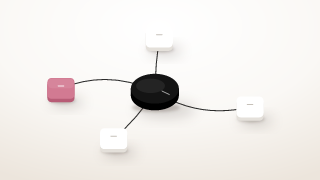
For cold outbound, a curated MCP directory exposes one best server per job (data, scraping, state, sending) and lets you swap any layer with a config change, while a vendor bundle like Forge, Smartlead, or Amplemarket wraps a whole product line behind one connection. The deciding dimension is not features. It is whether you want to own the orchestration layer or rent it.
That single question explains almost every disagreement operators have about Model Context Protocol tooling right now. The bundles win on install speed and lose on exit cost. The curated approach inverts both. Below is what each option actually does, the public facts behind the pitch, and the operator rule for picking a side.
Why MCP servers became the 2026 outbound debate
Anthropic introduced the Model Context Protocol in November 2024 as an open standard for connecting models to external tools and data, and within a year the wider industry, including OpenAI and Google DeepMind, adopted it as the default integration layer (Anthropic, Wikipedia). For cold outbound that shift moved the workflow out of a vendor dashboard and into the chat window, where an agent can call the tool directly.
Once every vendor could expose its product as a callable surface, the category forked. Large sales platforms shipped bundled servers that wrap their entire suite under one connection. Curated directories went the other way and published individual servers, one per job, so an operator assembles the stack instead of buying it whole. Both ship working software. They produce very different operator lives, and the difference compounds over time rather than at install.
If the MCP versus traditional sequencer framing is new to you, the agentic GTM operating system piece covers the orchestration layer first. This article assumes you already know why that layer matters and goes straight to the bundle versus curate trade.
What Forge MCP actually covers
Forge is Salesforge's full stack server. It exposes lead sourcing, sender infrastructure, mailbox warmup, email and LinkedIn sequencing, and infrastructure management behind one connection that spans five Salesforge products: Salesforge, Leadsforge, Infraforge, Warmforge, and Mailforge (Salesforge). Setup runs about five minutes by generating an API key per product you use, and the server works with Claude Desktop, Claude Code, Cursor, and Windsurf, with no native ChatGPT support at the time of writing (Salesforge).
The operator judgment here is narrow and worth stating plainly. Forge is a genuinely strong pick if you already run the Salesforge suite end to end, because one OAuth and one billing line replace five separate integrations. It is the wrong first MCP if you do not, because adopting it means adopting the whole product map underneath it. You are not installing a tool, you are committing to a vendor's view of how outbound should be shaped.
What Smartlead MCP actually covers
Smartlead's server is the most feature dense bundled option in the category. It ships 116 plus tools across six categories: campaign management, lead lifecycle, email account management, deliverability diagnostics, analytics, and webhook automation (Smartlead). Setup is paste an API key into an MCP client with no coding or infrastructure work, and most users are live in under five minutes (Smartlead).
The non-obvious part is that the tool count is a trap dressed as a selling point. A 116 tool surface means an agent has to reason about which of 116 tools to call on every step, and most operators touch a fraction of them while paying for the whole thing. Depth on the email layer is real, so if email infrastructure at scale is your actual bottleneck and Smartlead is already your system of record, the MCP turns that dashboard into chat. Anything outside email still lives somewhere else, which is exactly the seam where the curated camp starts.
What Amplemarket MCP actually covers
Amplemarket went narrow instead of wide. Its MCP runs prospect search, contact enrichment, activity lookup, and lead list building natively inside Claude and ChatGPT, with OAuth through the browser and no API keys (Amplemarket). Searching people and companies is free, enrichment costs 0.5 credits per contact, and results cache for 24 hours so repeat enrichments inside that window are not recharged (Amplemarket).
The free search and metered enrich model is the smart part of the design and the tell about its scope. Amplemarket priced the cheap action at zero to make the chat habit free, then charges on the action with marginal cost. For account research and target list building that is the fastest path in the category. The honest limit is that the moment you want to send, route, warm, or close the loop, you are stitching Amplemarket to other servers, which puts you in the curated camp whether you meant to be there or not.
How a curated MCP directory differs
A curated directory inverts bundling. Instead of one server owning the motion, it catalogs individual servers one per job and holds an opinion on which one wins each layer. In the Yalc MCP directory, Crustdata handles people and company data, Firecrawl handles scraping where no clean API exists, Notion handles operator state and lightweight CRM, and a dedicated server handles the deal pipeline. You install the servers your playbook needs into Claude Code once and run the orchestration from a markdown configured workflow on your own machine.
The structural payoff is where your data and logic live. Markdown files define how the servers connect, so switching one vendor for another is a config edit, not a migration project. There is no single vendor positioned to hold your pipeline hostage, because the orchestration logic is yours rather than the platform's. The cost is honest. You assemble the stack instead of clicking one button, and you accept that as the price of evolving it freely. This is the same property that makes the broader AI SDR tools playbook hold up for teams that outlive their first tool choice.
Where your data and workflows live, side by side
The clearest way to compare the four is to ask where the data and the orchestration end up sitting, because that is what determines your exit cost.
| Option | Scope | Data location | Switching cost |
|---|---|---|---|
| Forge MCP | Five Salesforge products, one connection | Inside Salesforge | High, rebuild the sequence and re-wire every tool |
| Smartlead MCP | 116 plus tools, email centric | Inside Smartlead | Medium, strong export but a Smartlead specific campaign model |
| Amplemarket MCP | Prospect search and enrich | Inside Amplemarket | Low by default, but you still need a second tool for sending |
| Curated directory | One server per job, your choice | On your machine and the underlying vendors | A config change, not a migration |
The pattern reads cleanly. Bundles are easier to install and harder to escape. A curated stack is harder to install and trivial to evolve. The cost you cannot see at the demo is the one that hits at exit, and a bundle hides exactly that one.
Setup time and the install versus exit trade
For an operator standing up outbound this quarter, install time is a real cost and the bundles win it outright. Amplemarket gets you searching prospects in roughly a minute over OAuth (Amplemarket). Smartlead is paste an API key and most users are live in under five minutes (Smartlead). Forge takes about five minutes for an existing Salesforge customer generating keys per product (Salesforge).
A curated stack costs more up front. You pick the servers, set credentials per vendor, install each into your Claude Code config, and load the skill that orchestrates them, which usually runs under an hour the first time. The decision rule is the cleanest in this whole comparison. If you need outbound running this afternoon, install a bundle. If you want a stack you will still be running unchanged in eighteen months, curate, because the workflow you build on top compounds in markdown instead of expiring with a vendor contract.
When the curated approach actually wins
The curated model earns its setup cost in three operator shapes, and only those three. Outside them, a bundle is the right call and curating is overkill.
The first is best in class per layer. You already run a dedicated data provider, your own sender infrastructure, and a custom enrichment waterfall because no single vendor wins on every layer, and a bundle would force you to surrender the parts that already work. The second is multi vendor signal capture. The signals you care about, hiring spikes, funding rounds, technographic shifts, web visits, sit across four sources plus a Firecrawl instance for pages no vendor covers, and a bundle physically cannot index every source you want. The third is data residency and procurement constraints, where state stays in markdown and Notion and only the specific calls you authorize leave your machine, instead of routing everything through one vendor's servers.
Across all three the underlying logic is identical. You would rather own the orchestration layer than rent it, and you have enough scale that the rent is no longer cheap. If none of these describe you, the next section is the more honest recommendation.
The hybrid model most serious stacks land on
Most mature cold outbound stacks in 2026 are not pure bundle or pure curate. They pick the single layer that dominates the operation, install the strongest bundled MCP for that one layer, and curate everything around it. This is the same logic that drives the operator sequence in the b2b lead generation guide, where you settle the data layer first and the sending layer last.
A cold email heavy team runs Smartlead MCP for the send layer and curated servers for Crustdata data, Firecrawl scraping, and Notion state, so the bundle owns the inside of email and the curated stack owns everything connecting email to the rest of the motion. A team already standardized on Salesforge runs Forge MCP as the primary orchestrator and adds curated data and state servers for the layers Forge does not own well, which stops the suite from quietly absorbing the CRM. A team still pre product market fit on outbound runs curated only, because it will change vendors every few weeks until the playbook settles and the cost of being locked into one data model dwarfs any setup time saved.
The takeaway is to stop treating this as binary. A bundled MCP is one component in the stack, not the whole stack, and the operators who treat it that way keep their optionality intact.
The closing rule
The best MCP server for cold outbound is the one that matches how you operate, not the one with the loudest install button. Forge wins for committed Salesforge customers. Smartlead wins for cold email scale players already paying for it. Amplemarket wins for fast account research. A curated directory wins for operators who would rather own the orchestration than rent it.
If you are choosing your first MCP this week, install one bundled server for the layer that hurts most and stand up a curated stack around it. Pick the data and state servers from the Yalc MCP directory, wire them into Claude Code, and write one markdown workflow that runs the whole motion in a single prompt. That is the stack that compounds. Not five dashboards. One conversation that runs the whole thing.
Frequently Asked Questions
What is an MCP server for cold outbound?
An MCP server exposes a sales tool's capabilities as functions an AI assistant can call directly from a chat, using the Model Context Protocol that Anthropic introduced in November 2024. For cold outbound that means searching prospects, enriching contacts, building sequences, and checking replies happen inside the conversation instead of a dashboard. The model decides which tool to call based on your plain English request.
Is a bundled MCP or a curated MCP stack better for cold email?
A bundled MCP like Smartlead or Forge is better when one vendor already owns your dominant layer and you want the fastest install. A curated stack is better when you run best in class tools per layer, capture signals across multiple data sources, or have data residency constraints. Most serious teams land on a hybrid, one bundle for the heaviest layer and curated servers around it.
How much does the Amplemarket MCP cost to use?
Searching people and companies through the Amplemarket MCP is free, and enrichment costs 0.5 credits per contact, with results cached for 24 hours so repeat enrichments inside that window are not recharged. You need an active Amplemarket account and a supported client such as Claude Pro, Max, Team, or Enterprise, or ChatGPT. Connection uses OAuth in the browser with no API keys.
How many tools does the Smartlead MCP server have?
The Smartlead MCP server ships 116 plus tools across six categories: campaign management, lead lifecycle, email account management, deliverability diagnostics, analytics, and webhook automation. Setup is pasting an API key into an MCP client with no coding, and most users are live in under five minutes. The wide surface is powerful for email at scale but more than most operators actually use.
Which MCP servers work with Claude Code?
Forge, Smartlead, and Amplemarket all connect to Claude Code, and a curated directory installs individual servers like Crustdata, Firecrawl, and Notion into the same Claude Code config. Forge and Smartlead use API keys per product, while Amplemarket uses OAuth. Running them from Claude Code lets you orchestrate the full motion from one markdown configured workflow.