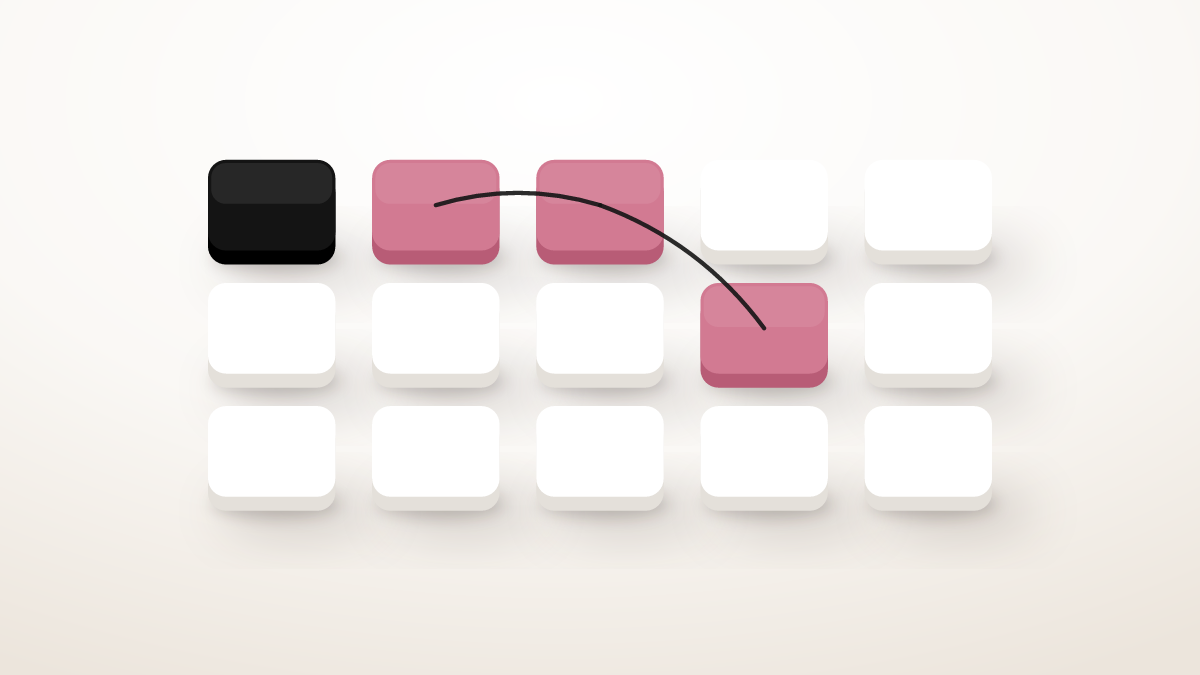
A LinkedIn outreach strategy that compounds runs three layers on one audience. Those layers are presence (content under your name), prospecting (targeted invites), and conversation (fast human replies). The layers feed each other, so a post you publish this week warms the invite you send next week. The step most operators botch is conversation, where they automate the invite and then ghost the inbox.
That last point is where most strategies quietly die. The accept rate looks fine, the reply rate looks fine, and the booked-call rate is zero because nobody followed up like a person. This is the operator playbook for wiring the three layers together, the weekly rhythm that keeps them running, and the LinkedIn automation tool stack and budget that hold it up.
What is a compounding LinkedIn outreach strategy
A compounding strategy is one where each cycle starts warmer than the last because the three layers share an audience and a memory. A spray-and-pray motion resets every month. A compounding one accumulates recognition, signal, and reusable context.
The reason this matters in 2026 is volume no longer buys reach. LinkedIn caps connection requests at roughly 100 per week for most accounts, and it deliberately keeps the exact threshold undisclosed so it can throttle accounts that behave like bots (PhantomBuster's 2026 limit guide, LinkedIn Help). Why the API-versus-browser split decides which accounts survive that throttling is the subject of our LinkedIn automation breakdown. When you can only send 100 invites a week, the deciding variable is not how many you send. It is how warm each one is when it lands. Here is the operator judgment a generalist skips. Treat the invite cap as a forcing function rather than an obstacle, because it makes warming the audience the single most valuable work you can do.
Why most LinkedIn outreach strategies fail
Three failure modes show up over and over, and each one comes from a piece of advice that sounds reasonable until you trace why it breaks.
The first is running content and outbound as separate channels. A founder posts twice a week and prays. A sales team fires invites and never reads the feed. Neither motion remembers what the other did to the same prospect, so the warming effect of content never reaches the invite.
The second is chasing volume past the cap. The cold-connect-plus-templated-pitch motion that worked in 2021 now burns accounts, because LinkedIn watches acceptance rate and downgrades senders whose invites get ignored or flagged as "I don't know this person." Generic requests accept at roughly 15 to 27 percent, while personalized ones reach 30 to 45 percent (Salesforge benchmark analysis, Expandi State of LinkedIn Outreach H1 2025). A low acceptance rate is not just a vanity metric. It is the input LinkedIn uses to decide whether to keep showing your content at all.
The third is no memory between cycles. The prospect who ignored you in February changed jobs in April. The post you wrote in March named the exact company that just raised a round. Without a system that captures and reuses those signals, every cycle starts cold. See LinkedIn outreach mistakes for the tactical version of these traps.
The three-layer stack
A compounding strategy runs three layers on the same target audience. Each has one job, and each measurably feeds the next.
Layer 1: presence
Presence is content published under your own name, not the company page. Two to four posts a week, in your voice, aimed at the same audience you plan to prospect. Hiring takes when you spot a sharp role, workflow takes when a play works, opinion takes when the market does something dumb.
The job of presence is not virality. It is recognition. A timing study of 16,492 connection requests found 88 percent of all acceptances happen within seven days, with an overall acceptance rate near 37 percent in that sample (Botdog 2025 analysis). When your invite lands inside that seven-day window and your face already looks familiar from the feed, you are fishing on the warm end of that distribution instead of the cold end. The LinkedIn post writing skill turns this into a repeatable draft-to-publish motion so the cadence does not collapse the first busy week.
Layer 2: prospecting
Prospecting is the targeted send. Lists segmented by job change, hiring signal, funding round, or technographic match, with first messages that reference real context and a clear reason to reach out that is not the prospect's title.
This is where tooling earns its keep. LinkedIn Sales Navigator owns the filtering layer at $119.99 per month for the Core plan (LinkedIn's official compare-plans page), which is the price of clean saved searches you can rebuild weekly. Unipile gives you API access to send and reply from your own account without a Chrome extension that LinkedIn flags by next quarter. The discipline is restraint: stay under the weekly cap, keep first messages under 300 characters, and decide who NOT to send to before deciding who to send to. The LinkedIn prospecting workflow covers the list-building mechanics in depth.
Layer 3: conversation
Conversation is everything after the accept, and it is the most under-invested layer in 2026 precisely because the first two are the ones tools automate for you. Operators wire up the invite and abandon the inbox.
The compounding play runs the opposite. Light automation in the inbox, heavy on quick contextual human replies inside 24 hours of any signal. Every reply gets classified, every objection gets logged, every signal becomes input for next week's content. One decision rule separates this from generic "follow up fast" advice. Never run an automated sequence step against someone who already replied. A human reply means a human takes the thread from there, full stop.
How content feeds prospecting feeds inbound
The compounding effect lives in how the layers talk to each other, and you can engineer it on purpose.
Content seeds the next prospecting batch. After you publish a post on how hiring spikes predict pipeline, your following batch can open with that post. "I wrote last week about hiring signals predicting pipeline. You added three account executives this month, so I am curious how you are staffing the pipeline behind them." That reads as commentary, not a pitch, which is exactly why it clears the personalized acceptance band instead of the generic one.
Prospecting feeds content. Every objection in a DM thread is next week's post. The prospect who pushed back on your pricing line wrote your teardown for you. The buyer who asked for a specific proof point told you what your page is missing. The B2B lead generation operator playbook treats this loop as the engine rather than a side effect.
Both feed inbound. Posts that land pull profile visits from people you never invited, and some message first. Inbound from presence converts well because the prospect already chose you, so your only job is to be in the inbox when they show up. That is the same buy-the-infrastructure, own-the-judgment pattern described in the AI SDR tools field map.
Weekly rhythm for solo operators and teams
The strategy only works on a rhythm the operator can actually hold. The top reason these strategies fail is not the playbook. It is the calendar.
For a solo operator, three blocks cover it.
- Content block, 90 minutes once a week. Draft two posts, schedule, done.
- Prospecting block, 60 minutes twice a week. Pull the Sales Navigator list, personalize the next batch inside the weekly cap, send.
- Conversation block, 20 minutes every weekday. Open the inbox, reply to every accept, DM, and comment thread by hand.
That is roughly four hours a week. More and the operator burns out. Less and the motion stops compounding.
For a team, split by skill, not by headcount math. The founder owns presence because nobody ghostwrites voice convincingly at scale. An SDR or ops person owns prospecting, which covers lists, targeting, send execution, and reporting. A second person owns conversation. The mistake teams make is handing all three to one person, when presence needs taste, prospecting needs patience, and conversation needs instinct. Different jobs.
LinkedIn outreach tool stack and budget
A modern strategy needs four categories covered, not ten tools.
| Category | What to use | Why it earns the slot |
|---|---|---|
| Filtering and lists | Sales Navigator Core, $119.99/mo | Owns the data layer; cancel anything else here |
| Sending and inbox | Unipile API on your own account | Scriptable sends and replies without a flaggable browser extension |
| Signal capture | Whatever fits your ICP | Hiring, funding, job-change, or technographic signals decide the list |
| Content publishing | Native LinkedIn plus a scheduler | Native reach; scheduler lets you batch the presence layer |
Sales Navigator's price is public and fixed (LinkedIn compare-plans). The rest depends on the signal feeds you add, so a solo operator stack typically lands in the low hundreds per month, and the real cost is the integration glue between the four categories, not the SaaS line items. Replace that glue with markdown-configured agents and the math changes. That is the Clay alternatives guide thesis applied to LinkedIn: buy the data and the sending rails, keep humans on first-mile strategy and last-mile conversation, and let agents handle the wiring in between.
What to run this week
Pick the single most broken layer. Usually it is presence, because most operators with a real prospecting motion have a thin profile and no cadence, or it is conversation, because most teams obsess over the invite and ghost the reply. Run that one layer alone for two weeks before adding the next. The compounding effect only kicks in when each layer runs cleanly on its own, so build one, prove it, then stack the second.
Frequently Asked Questions
How many LinkedIn connection requests can I send per week in 2026?
LinkedIn caps most accounts at roughly 100 connection requests per week and keeps the exact number undisclosed so it can throttle accounts that behave like bots (PhantomBuster). New accounts and accounts with low acceptance rates get tighter limits. Treat the cap as a forcing function to warm each invite rather than a number to maximize.
What is a good LinkedIn connection request acceptance rate?
Generic cold requests accept at roughly 15 to 27 percent, while personalized requests reach 30 to 45 percent (Salesforge, Expandi). Acceptance rate also feeds LinkedIn's view of your account, so a low rate can suppress your reach over time. Aim for the personalized band by warming the audience with content first.
How much does LinkedIn Sales Navigator cost?
The Sales Navigator Core plan is $119.99 per month per license, or $1,079.88 billed annually for a roughly 25 percent discount (LinkedIn compare-plans). It owns the filtering and saved-search layer, which is why it stays in the stack while most other list tools can be cut.
Should I send a message with my LinkedIn connection request?
Context matters more than the message field itself, since requests with and without notes accept at similar rates in aggregate. The lift comes from warming the prospect beforehand with content and referencing a real, specific reason to connect. A short note that names a genuine trigger outperforms both a generic note and a blank request.
How long should I run each layer before adding the next?
Run one layer cleanly for about two weeks before stacking the second. Most operators get the fastest gain by fixing presence first, because a thin profile caps the acceptance rate on everything downstream. Once one layer runs without you babysitting it, add the next so the compounding effect can build.